There is a moment in the life of every successful Shopify store where growth starts to feel like a problem instead of a celebration. Orders are climbing. Revenue is up. But so is the time you spend on admin work, and the mistakes that come with doing everything manually. The natural instinct is to hire: bring on someone to handle order processing, someone for bookkeeping, maybe someone to manage marketplace listings. But hiring is expensive, slow, and introduces complexity of its own. There is a better path — and the most profitable Shopify merchants have already found it.
The scaling trap most merchants fall into
The pattern is predictable. When you are doing ten orders a day, manual processes work fine. You copy order details into your invoicing software, update inventory across your channels by hand, and handle customer communication personally. It takes an hour or two, and the rest of your day is spent on things that actually grow the business — marketing, product development, customer relationships.
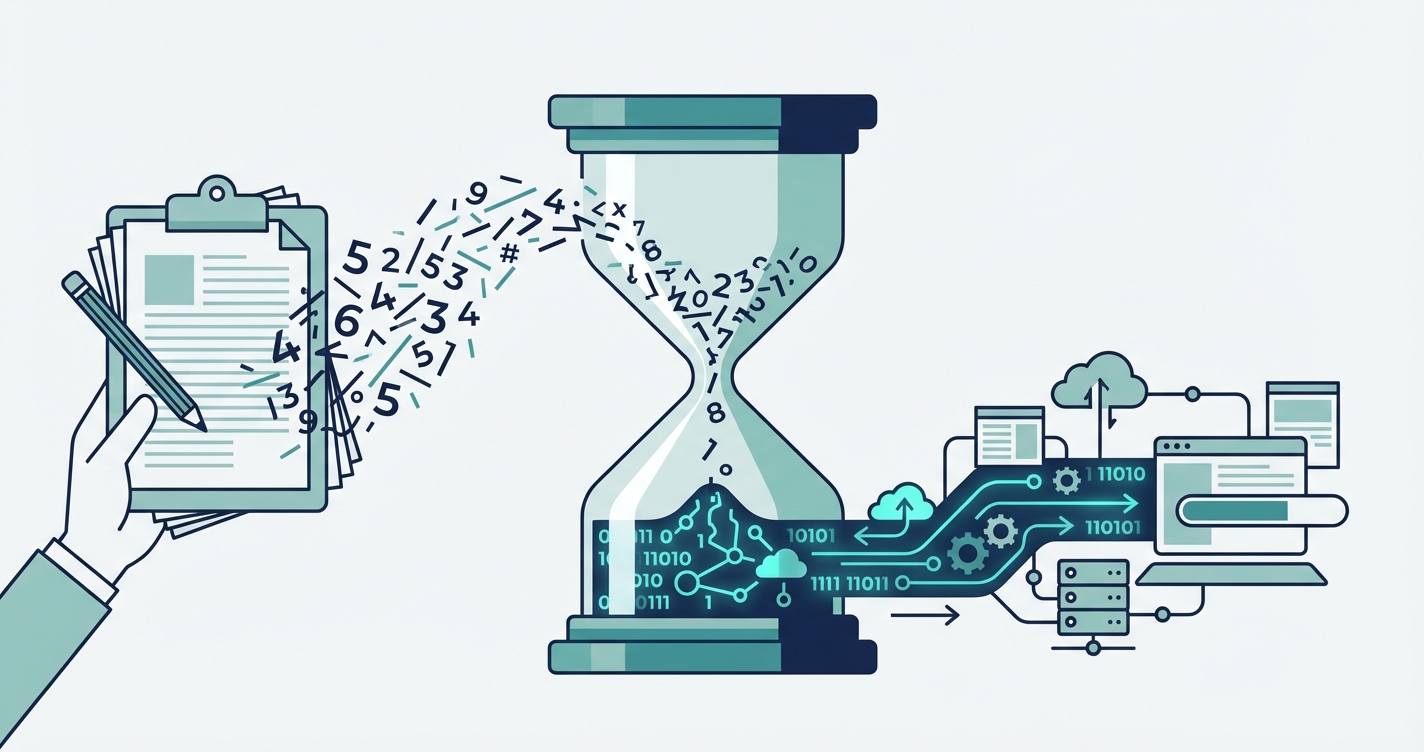
Then you hit fifty orders a day. Suddenly those manual tasks consume your entire workday. You are no longer running a business — you are operating a data entry station. Every order means opening three different platforms, copying information between them, and hoping you do not make a mistake. The work that drove your growth — the creative, strategic, revenue-generating work — gets pushed to evenings and weekends.
The obvious solution is to hire someone. A part-time operations assistant costs between 1,500 and 2,500 euros per month in the Netherlands. A full-time employee with benefits and overhead costs significantly more. You need to train them, manage them, and deal with the inevitable disruptions when they are sick, on vacation, or when they leave and you need to start over. And here is the uncomfortable truth: even with that new hire, you are still doing things the manual way. You have just added another person to a broken process. When orders double again, you will need to hire again.
Identifying what should be automated
Not every task in your business should be automated. Creative work, customer relationships, strategic decisions, product design — these require human judgment and are where your time creates the most value. But a surprising amount of daily operations work is purely mechanical: repetitive, rule-based, and identical every time. These are the tasks that automation handles better than any human ever could.
Order processing and fulfillment
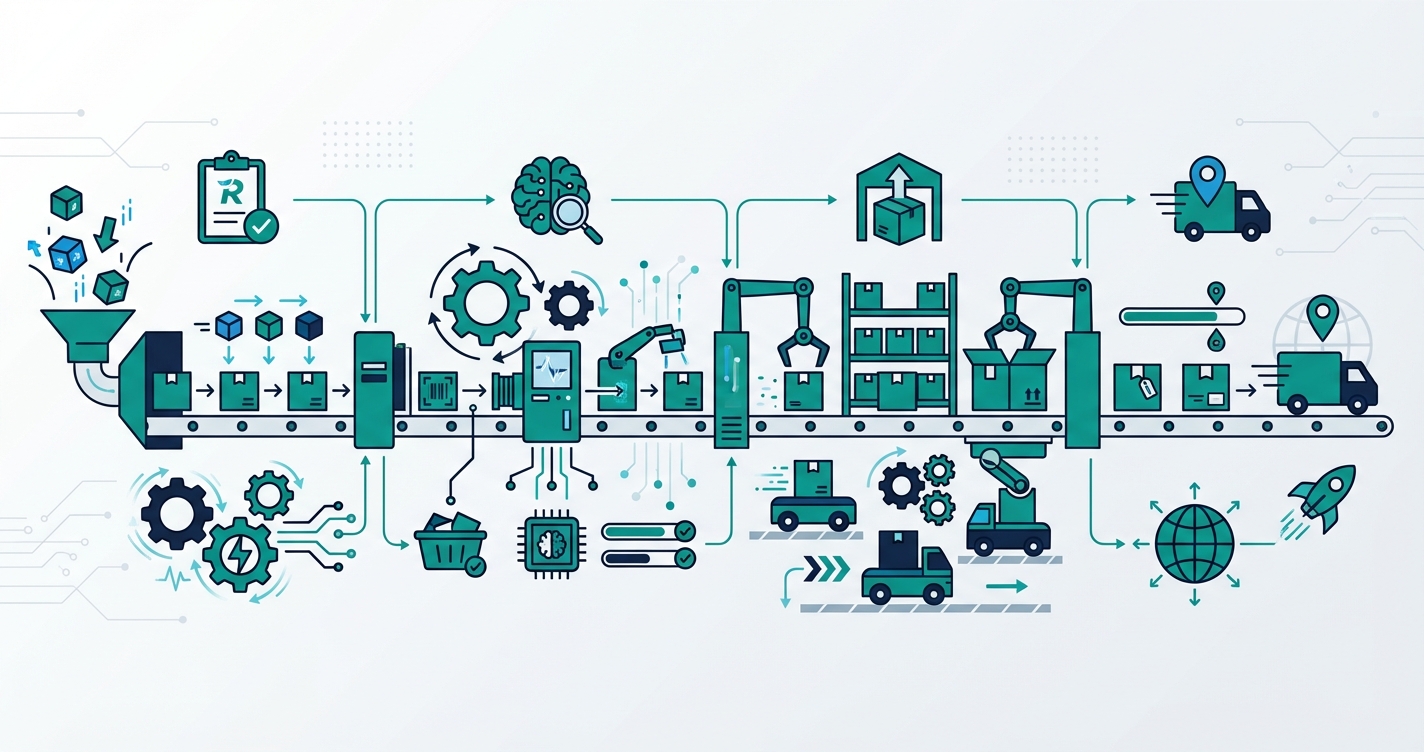
When an order arrives, the downstream actions are predictable. The order might need to be forwarded to a fulfillment provider. A picking list might need to be generated. Tracking information needs to flow back to the customer. If you sell on multiple channels, the order might originate from Bol.com but need to be managed in Shopify. Every step in this chain can be automated, and each step you automate eliminates a point where delays and errors creep in.
Inventory management across channels
If you sell on Shopify and Bol.com — or any combination of channels — keeping inventory synchronized is one of the most time-consuming and error-prone manual tasks. Sell an item on Bol.com and forget to update Shopify? You oversell. Receive new stock and forget to update one channel? You leave money on the table. Automated inventory synchronization through a tool like BolSync eliminates this category of problems entirely, updating all channels within seconds of any stock change.
Invoicing and bookkeeping
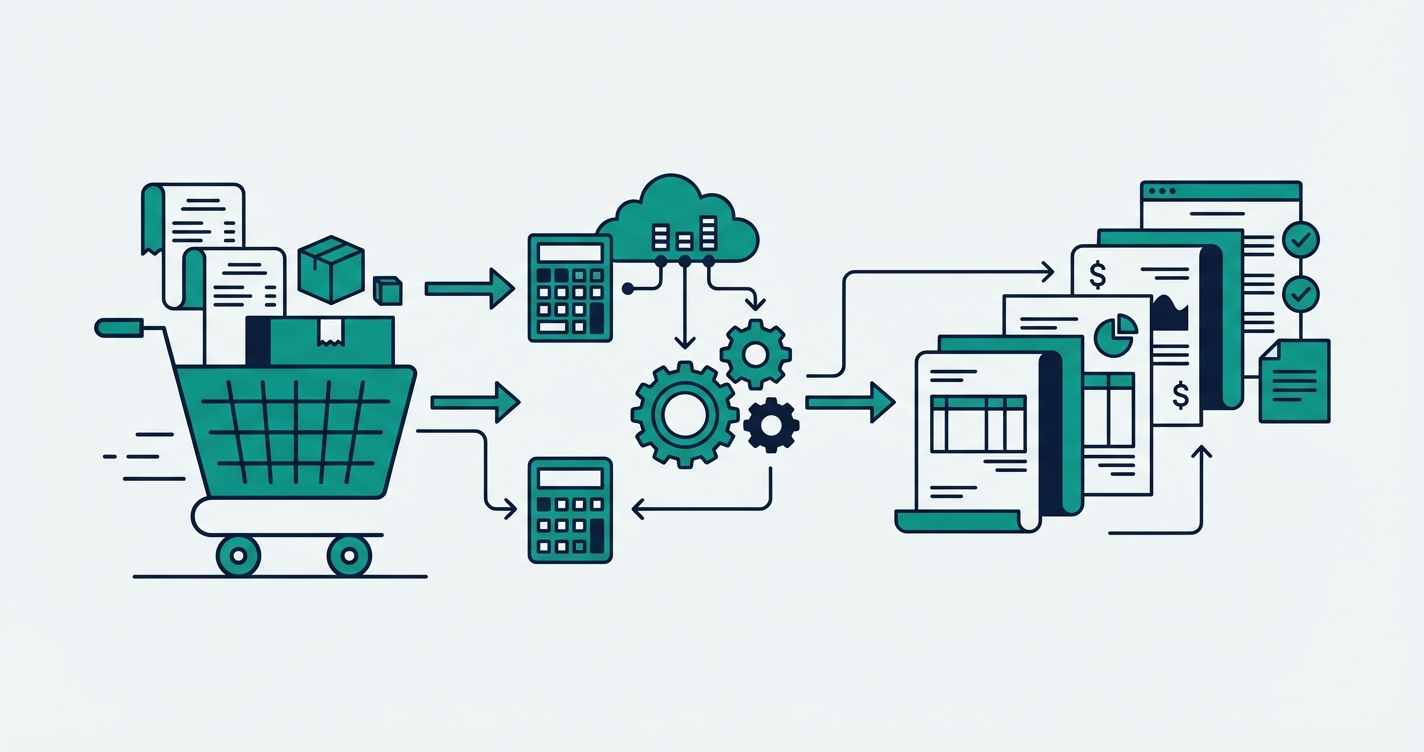
Every order needs an invoice. Every return needs a credit note. These documents need to follow specific rules — the correct tax rates, the right payment terms, proper contact details. For Dutch merchants, getting this wrong means trouble with the Belastingdienst. Manually creating invoices in software like Moneybird is tedious and error-prone. A tool like MoneybirdSync creates perfect invoices automatically from every Shopify order, with smart contact matching and configurable rules per product type.
Customer communication
Order confirmations, shipping notifications, delivery updates, review requests — these follow predictable patterns and should happen automatically. When a customer has to email you asking for a tracking number because you forgot to send it, that is not a customer service moment — it is a process failure that erodes trust.
The math of automation versus hiring
Let us make this concrete. Suppose you are processing a hundred orders per day and each order requires fifteen minutes of manual work across all the tasks described above: order management, inventory updates, invoice creation, and customer communication. That is twenty-five hours of manual work per day — roughly three full-time employees.
Three employees at a fully loaded cost of 3,500 euros per month each means 10,500 euros per month, or 126,000 euros per year. That figure does not account for hiring costs, training time, management overhead, or the productivity dip when someone leaves and needs to be replaced.
Now consider the automation alternative. A suite of integrations covering order syncing, inventory management, and automated invoicing might cost between 100 and 300 euros per month combined. These tools work twenty-four hours a day, seven days a week, with zero errors and zero sick days. The cost savings are not marginal — they are an order of magnitude.
The goal is not to eliminate people from your business. It is to free them from work that machines do better, so they can focus on work that only humans can do.
Even if you still need one person for customer service and exception handling, you have replaced three positions with one — and that remaining person is doing meaningful work instead of copying data between spreadsheets.
Need a custom integration for your Shopify store?
What lean scaling looks like in practice
We work with Shopify merchants who handle hundreds of orders per day with teams of two or three people. Not because they cannot afford to hire, but because they do not need to. Their operations run on automated integrations that handle the mechanical work while their small teams focus on growth.
One merchant selling on both Shopify and Bol.com went from struggling at thirty orders per day with two full-time staff to comfortably handling over two hundred orders per day with the same team after implementing BolSync for marketplace synchronization and MoneybirdSync for automated invoicing. The time they reclaimed went directly into expanding their product line and entering a new marketplace — activities that generated revenue instead of just processing it.
Another merchant running a 3D printing business was about to hire a dedicated order processor when they discovered SimplyPrintSync. The integration eliminated the entire manual workflow of translating Shopify orders into print jobs. Instead of hiring at two thousand euros per month, they pay a fraction of that for an integration that handles ten times the volume without errors.
A practical automation roadmap
If you are currently drowning in manual work and wondering where to start, here is a practical sequence based on what we have seen work for hundreds of merchants.
Start with invoicing
Automated invoice creation delivers immediate, visible value. Every merchant needs invoices, the rules are well-defined, and the time savings are instant. If you use Moneybird, this is a solved problem. Setting up automated invoicing typically saves thirty minutes to two hours per day depending on your order volume, and it eliminates the most common bookkeeping errors.
Then tackle inventory synchronization
If you sell on multiple channels, inventory sync should be your second priority. The cost of overselling — refunds, negative reviews, marketplace penalties — far exceeds the cost of any integration. Real-time inventory synchronization is not a luxury; it is a requirement for any serious multi-channel operation.
Then automate order routing and fulfillment
Once invoices and inventory are handled automatically, turn your attention to the order fulfillment pipeline. Automated order routing, status updates, and tracking information push the remaining manual work out of your daily operations. At this point, most merchants find that their remaining manual tasks are genuinely valuable — handling customer questions, managing supplier relationships, and making strategic decisions about the business.
Growth should feel like opportunity, not burden
The merchants who scale most successfully are the ones who invest in their operations infrastructure before they desperately need to. They do not wait until they are drowning in orders to think about automation. They build the systems that let them grow smoothly, so that when orders double, their workload does not.
If your business has reached the point where growth means more grunt work instead of more opportunity, the answer is not more people — it is better systems. Automation lets you keep the lean, agile advantages of a small team while operating at the scale of a much larger one.
Ready to scale without the headcount? Get in touch and we will map out which automations will have the biggest impact on your specific operation.